If you’ve got tooth decay, a crack, or wear that’s compromised a tooth but a regular filling just won’t cut it — and a full crown feels like overkill — inlays and onlays are probably the options your dentist is going to bring up. Here’s what you need to know about when each one makes sense and what they actually do for your teeth.
What Exactly Is a Dental Inlay?
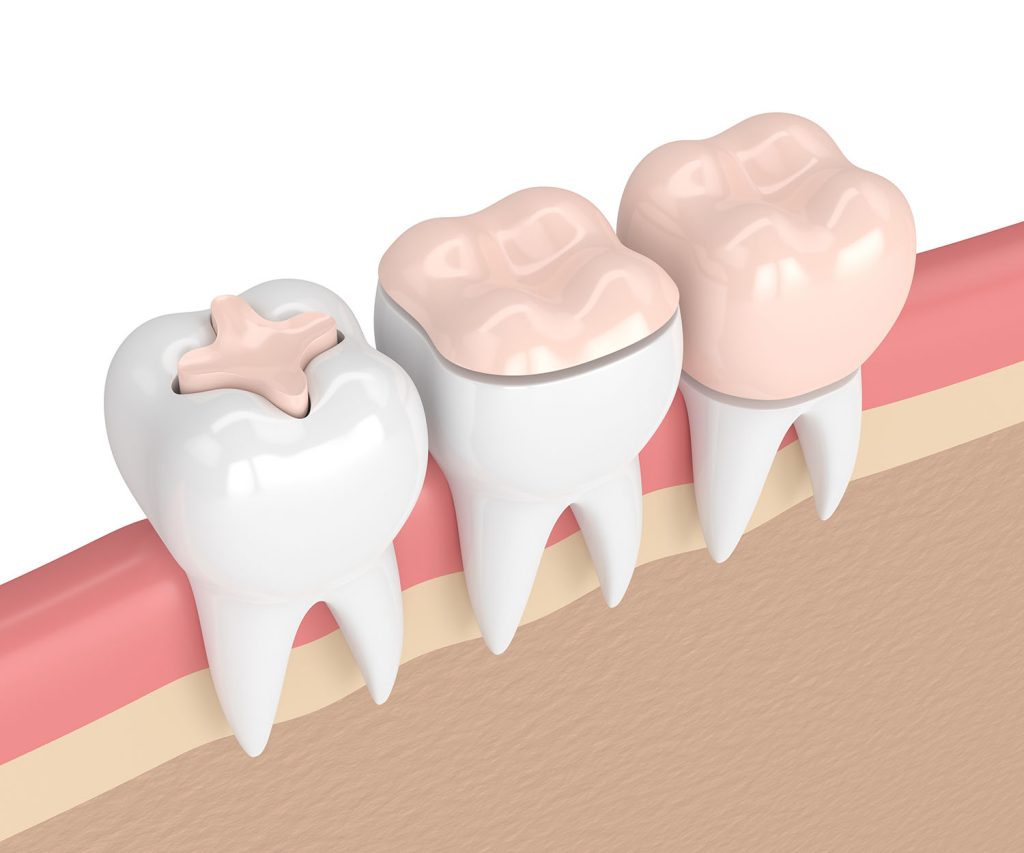
An inlay is a custom-made restoration — usually gold, porcelain, or composite resin — used when the damage is more than a filling can handle but not quite bad enough to need a full crown. It fits neatly within the grooves of the tooth, giving you both structural support and a result that still looks natural.
What It’s Actually For
The whole point of an inlay is restoring how your tooth functions and looks, without sacrificing more of your natural tooth than necessary. It fills the gap left by decay or damage while keeping as much of the original tooth intact as possible — which matters not just for that tooth, but for the health of the ones around it too.
Why Inlays Are Worth Considering
Beyond just strengthening the tooth, inlays actually beat out traditional fillings in a few ways. They hold up better over time, they’re less prone to cracking or wearing down, and because they’re custom-fitted, they tend to feel more comfortable and work more effectively than a standard filling would.
They also resist staining and blend right in with your natural tooth color — which is a big reason people choose them when they want the repair to be basically invisible. Because they’re precisely manufactured, there’s less risk of decay creeping in around the edges too. And compared to a crown, an inlay requires removing less of your natural tooth, so you’re keeping more of what you started with while still getting solid support.
What About Onlays?
Onlays step in for a bit more damage than an inlay is meant to handle, while still being a more conservative option than a full crown. They’re often used for larger cavities or teeth that have broken down more significantly, and like inlays, they’re custom-shaped to fit your specific tooth for the best possible result.
What Onlays Are Designed to Do
Onlays act almost like a protective shell for a damaged tooth, made from durable materials like porcelain or composite resin. Their job is to bring back the tooth’s strength and structure while still preserving as much of the natural tooth as they can — so you keep your smile intact without giving up function.
The Upside of Choosing an Onlay
There’s a lot to like here. Onlays don’t just repair the tooth — they help protect it from further decay and damage down the road.
With proper care, they can last for years, which makes them a solid long-term value even if the upfront cost is higher than a filling. They’re also less invasive than a crown, meaning your dentist gets to preserve more of your actual tooth. And since they can be color-matched to your teeth, the repair blends right into your smile. All told, an onlay tends to be both a practical and good-looking way to restore a damaged tooth.
When Does an Inlay Make Sense?
Sometimes a regular filling just isn’t enough, but a full onlay would be more than what’s needed. If the decay or damage is minimal to moderate and the surrounding enamel is still solid, an inlay is often the sweet spot — restoring what’s needed without taking more of the tooth than necessary.
Signs an Inlay Is the Right Call
Typically, an inlay comes into play when a cavity is too big for a standard filling but doesn’t require the broader coverage an onlay provides. They tend to work especially well on back teeth, where chewing forces are strongest and you want something durable without losing more of the tooth than you have to.
What Your Dentist Will Weigh
Before recommending an inlay, your dentist will look closely at how much healthy tooth structure remains and whether it’s strong enough to support this kind of restoration. They’ll also walk you through any risks specific to your situation.
It’s worth having a real conversation with your dentist about what’s going on with your tooth — factors like where it’s located, how much healthy structure is left, and your general dental health all play into the decision. Since inlays can be made from porcelain or composite resin, they can also be color-matched closely to your natural teeth, so you’re not sacrificing looks for function.
When Does an Onlay Make More Sense?
If the damage or decay is more extensive — enough that a simple filling won’t hold up — an onlay is likely the better fit. It offers more coverage and support, which is especially important when the damage reaches the cusp (the raised points) of the tooth. Compared to a crown, it still preserves more of your natural tooth while giving you that added strength.
When Dentists Typically Recommend Onlays
Onlays usually come up when decay has progressed far enough to threaten the tooth’s overall integrity — particularly when it’s affecting the chewing surface or the cusps. They’re also a common choice when an existing large filling has failed and needs something sturdier to take its place.
What to Expect With Onlay Treatment
Onlays bring real benefits — more strength, and often a better cosmetic result too. Your dentist will look at the extent of the damage, your broader oral health, and what you personally prefer before landing on this as the right treatment.
Getting an onlay usually takes two visits. At the first, your dentist removes the decay, takes impressions of the tooth, and fits you with a temporary restoration in the meantime. At the second visit, the custom-made onlay gets permanently cemented in place. The end result restores full function while still looking like a natural part of your smile.
Inlays vs. Onlays: A Quick Comparison
Both restorations repair damaged teeth, but they’re built for different situations. Here’s how they stack up:
| Feature | Inlay | Onlay |
|---|---|---|
| Placement Area | Within the cusps of the tooth | Covering one or more cusps |
| Extent of Damage | For less extensive decay | For more extensive decay |
| Material Used | Typically composite or porcelain | Typically composite, porcelain, or gold |
How the Procedures Differ
The prep work for each is a bit different. Inlays are simpler to prepare since they sit entirely within the cusps of the tooth, while onlays need more extensive shaping of the tooth to provide that extra coverage and support. Both typically require two appointments — one for impressions, one for the final placement — but onlays generally involve more complex tooth preparation.
What About Cost?
Cost is often a real deciding factor between the two. Pricing varies based on the material used and how complex your specific case is, and your dental insurance may cover part of it either way.
Generally speaking, inlays run a bit cheaper than onlays since they use less material and involve a simpler procedure. You’re looking at roughly $650 to $1,200 for an inlay, and anywhere from $1,000 to $2,500 for an onlay. Your dentist can give you a more precise estimate based on your specific situation, and can also walk you through what your insurance is likely to cover.
Talking It Through With Your Dentist
At the end of the day, your dentist is the one who can actually tell you whether you need an inlay or onlay. They’ll look at your tooth, talk through any symptoms you’re having, and recommend whichever option fits your situation best. Keeping up with regular checkups also means problems get caught early — before they turn into bigger, more expensive fixes.
Good Questions to Ask at Your Appointment
Worth asking: what exactly they found, why they’re recommending an inlay over an onlay (or vice versa), and what the cost and recovery process will actually look like. Understanding all of that upfront helps you feel confident about however you decide to move forward.
Why a Professional Evaluation Matters
Before committing to any treatment, a proper evaluation is essential — it keeps you from undergoing procedures you don’t actually need and helps ensure you get the best possible outcome. Your dentist will factor in the extent of the damage, your overall oral health, and your dental history before making a recommendation.
This evaluation is really what makes the whole decision clear — it’s how your dentist figures out whether a smaller inlay or a more substantial onlay is the right call for your specific tooth. Getting this right upfront helps prevent complications down the line and keeps you on track for long-term oral health.
Bottom Line
Figuring out whether you need an inlay or onlay really comes down to how much damage your tooth has and what your dentist recommends after taking a look. Persistent pain, visible decay, or a dentist flagging the need for restorative work are all signs it’s time to consider one of these options. Inlays handle smaller repairs, onlays take on the bigger jobs involving the tooth’s cusps — and either way, staying on top of your dental health and trusting your dentist’s evaluation is what leads to the best outcome for your smile.