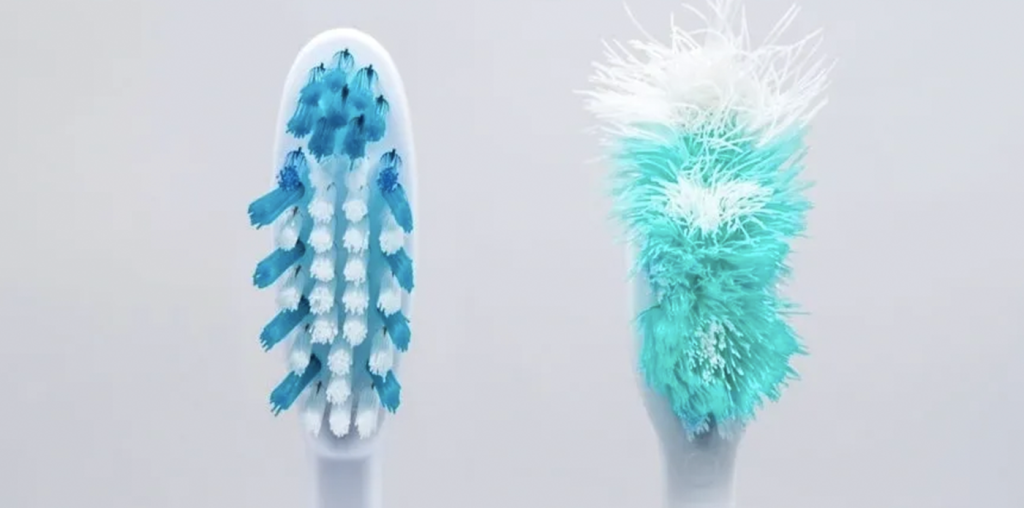
The quick answer we give most patients is every three months, give or take — sooner if the bristles are already looking rough, if you’ve just gotten over an illness, or if you’ve noticed brushing just isn’t leaving your mouth feeling as clean as it used to. But the right timing depends a bit on how you brush, what kind of brush you use, and where you’re keeping it between uses, so it’s worth walking through the details rather than just memorizing a number.
Importance of a Clean Toothbrush
A toothbrush that isn’t kept clean can end up putting more back into your mouth than it takes out. Research has found that brushes can harbor bacteria, fungi, and even viruses — and that risk climbs when a brush is stored wet rather than allowed to dry. The fix isn’t complicated: rinse it well after every use, stand it upright so air can actually get to the bristles, and replace the whole thing every three to four months, or right away if you’ve been sick. It’s a small habit, but it makes a real difference in how effective your brushing actually is.
Bacterial Growth
Leave a wet brush sitting in a closed container and you’ve basically built a little incubator. Studies tracking this have found bacterial counts climbing noticeably within just 24 to 48 hours, and things get worse if multiple brushes are touching each other in the same holder. The fixes are simple — keep brush heads separated, rinse thoroughly under running water until it runs clear, and let the brush air-dry fully. Doing those three things cuts down microbial survival by quite a lot.
Effectiveness of Brushing
Bristles that have started to splay outward simply don’t clean as well. Dental research has tied visibly frayed bristles to a measurable drop in plaque removal, which is exactly why the American Dental Association recommends swapping brushes every three to four months. If you’re noticing bent or worn bristles well before that window — sometimes just a few weeks in — there’s no harm in replacing early to keep your gums and teeth getting the attention they need.
Even with a solid two-minutes-twice-a-day routine, worn bristles start to miss the harder-to-reach spots — down along the gumline and in between teeth — well before they look obviously damaged. If you brush with a heavier hand, wear braces, or are recovering from an infection, plan on replacing sooner than the standard three months. And if you use an electric brush, swapping the head on the same kind of schedule keeps it performing the way it did in the clinical trials it was actually tested in.
Recommended Replacement Frequency
As a general rule, plan on a new toothbrush every three months. The ADA’s official window is three to four months, though a lot of dentists, including us, lean toward the earlier end of that. If you’ve just come down with something like strep throat or the flu, swap the brush right after you recover — otherwise you risk reinfecting yourself with the same bug. Kids’ brushes wear out faster, so six to eight weeks is a more realistic target there. For electric toothbrushes, follow the same general timeline for the brush head, or go with whatever the manufacturer specifically recommends.
General Guidelines
Take a look at your brush once a month and check for bristles that are splayed or bent — replace early if you spot either. Store it upright somewhere it can air-dry, and skip closed containers, which trap moisture and give bacteria a place to thrive. Sharing a toothbrush is never a good idea, and if you’ve had something contagious, that’s a good reason to swap brushes immediately rather than waiting out the usual schedule. Heavy-handed brushers in particular should check more often and may need to replace as often as every six to eight weeks if wear shows up early.
Factors Influencing Replacement
A handful of things shift how often you’ll actually need a new brush: how worn the bristles are, how often and how hard you brush, whether you’ve been sick recently, how the brush is stored, and whether you’re dealing with braces, implants, or a weaker immune system. Nylon bristles show wear pretty visibly over time, and research has found bacterial load climbing measurably by around the three-month mark regardless of how careful you are. Travel and damp storage tend to speed all of this up, so you may find you need to replace more often than someone with a drier bathroom setup.
A few patterns worth knowing:
Fraying or splayed bristles are a clear sign cleaning efficiency has dropped. Brushing twice daily wears a brush down faster than occasional use does, which sounds obvious but catches people off guard. Recovering from something like the flu, strep, or COVID-19 is a good enough reason to replace the brush outright rather than wait. Humid bathrooms and closed brush cases both encourage bacterial growth. And if you have braces or implants, plan on a shorter runway — often six to eight weeks rather than three months.
There’s room to adjust based on your specific situation, too. Aggressive brushers, kids, and anyone using an oral appliance usually need to swap brushes sooner than average, while research comparing manual and electric heads shows they wear out at roughly similar rates. A quick physical check helps: bend the tip of the bristles gently, and if they don’t spring back into shape, that’s your sign. Specialty brushes should follow whatever the manufacturer recommends, and any contagious illness is reason enough to replace right away regardless of how recently you last did.
A few more practical notes: check bristles both visually and by feel once a month, replace electric brush heads on the same schedule as manual brushes, and keep a spare on hand for travel so you’re not relying on a damp, sealed case. If you tend to brush hard, a softer-bristle option paired with more frequent replacement is often the better combination. And if you’re immunocompromised, it’s worth asking your dentist for a schedule tailored specifically to you rather than following the general guidelines here.
Signs It’s Time for a New Toothbrush
There are some pretty clear tells that a brush has reached the end of its useful life: bristles that are fraying or splayed, a head that looks warped, staining that won’t rinse away, or a sour smell even after it’s dried. The three-to-four-month rule is a good baseline, but any of these signs can show up earlier — especially if you brush hard or you’re getting over a respiratory illness — and when they do, it’s worth acting on them rather than waiting out the calendar.
Visual Indicators
Keep an eye out for bristle tips that are splayed or flattened, bristles that are noticeably uneven in length, a bent neck, or tufts that look discolored — all of these reduce how well the brush actually makes contact with your teeth. As a rough benchmark, if bristles are visibly flaring outward beyond the edges of the brush head within six to eight weeks of daily use, it’s time for a new one.
Performance Issues
You’ll usually notice this before you consciously think about bristle wear: plaque still lingering after brushing, gums that bleed more than they used to, or needing to brush longer just to feel like your mouth is actually clean. Clinical research backs this up — worn bristles clean measurably less effectively — so if you’re following the standard two-minutes-twice-daily routine and still not getting the results you expect, it’s worth replacing the brush sooner than the usual three-to-four-month mark.
A simple way to test this yourself: run a finger lightly across the bristle tips. If they feel frayed or blunt rather than crisp, they’re simply not making the same mechanical contact with your teeth anymore, and several small clinical studies back up what that means for cleaning efficiency. There’s also a hidden risk here — worn bristles can tempt you to brush harder to compensate, which can end up irritating your gums. Better to just replace the brush (or the electric head, typically every three months or so) and definitely swap it out after a cold or flu to avoid re-exposing yourself.
Types of Toothbrushes and Their Lifespan
| Toothbrush Type | Typical Lifespan |
|---|---|
| Manual (soft nylon) | 3–4 months, sooner if bristles splay |
| Electric replacement heads | About 3 months; some brands suggest 2–3 months |
| Orthodontic / V-bristle | 6–8 weeks for heavy bracket cleaning, replace when splayed |
| End-tuft / Implant | Every 2–3 months, or sooner if the tips deform |
Soft-bristle manual brushes remain a perfectly good, inexpensive option when used with proper technique. That said, oscillating-rotating and sonic electric heads tend to edge out manual brushes in clinical trials. Whatever type you use, a monthly bristle check paired with earlier replacement after illness or heavy wear is the habit that actually matters most.
Manual vs. Electric
A soft manual brush, used properly for two minutes twice a day, will get the job done — plenty of people have great oral health with nothing fancier than that. That said, electric brushes do show measurable advantages in the research: a Cochrane review found powered brushes reduced plaque by around 11% and gingivitis by around 6% compared with manual brushing, on average across pooled studies. Just don’t forget that electric heads still need replacing on roughly the same three-month schedule — sooner if the bristles fray or you’re wearing braces.
Specialty Toothbrushes
Orthodontic, end-tuft, and sulcus brushes all wear differently than a standard brush. V-bristle orthodontic heads tend to wear out faster — often within six to eight weeks — given how much work they’re doing cleaning around brackets. End-tuft brushes used around implants are worth checking every six to eight weeks and replacing as soon as the tips start to lose their shape, since a deformed tip just isn’t cleaning effectively anymore.
If you’re in braces, pairing an orthodontic brush with interdental brushes (sized somewhere between 0.4 and 1.5 mm depending on the gap) tends to clear plaque around brackets far better than a standard head alone. For implants or fixed bridges, tapered end-tuft brushes with soft, low-abrasion bristles help avoid irritating the surrounding tissue. In all these cases, replace based on visible wear, your own comfort, and any specific guidance your dentist gives you — especially after any oral surgery.
Proper Care and Maintenance
Rinse and let your brush dry after every use, give it a proper sanitizing once a week, and replace the head every three months or sooner if you’ve been sick. Once bristles are splayed by more than 2–3 mm, they’ve largely lost their cleaning power. A vinegar-and-water soak (one part vinegar to two parts water) for about 15 minutes, or a 3% hydrogen peroxide soak for around 5 minutes, both help cut down on microbes. Just avoid parking your brush in a sealed container for long stretches — that’s exactly the environment bacteria thrive in.
Cleaning Your Toothbrush
After each use, rinse under running water for about 20 seconds to clear away toothpaste and debris, then stand the brush upright to air-dry. Once a week, it’s worth disinfecting more thoroughly — either a 5-minute soak in 3% hydrogen peroxide, or running it through the top rack of the dishwasher if the manufacturer says that’s safe. Both options knock down bacterial load without damaging the bristles.
A few habits worth keeping: rinse thoroughly after every single use, sanitize weekly with that hydrogen peroxide soak or a dishwasher cycle, and don’t soak the brush for longer than about 15 minutes — beyond that, you risk loosening the bristle tufts or weakening the glue holding the head together.
Storage Tips
Store your brush upright, out in the open air, and ideally at least 6 inches (about 15 cm) away from any other brushes — if heads are touching, the risk of cross-contamination goes up. Avoid leaving a brush capped in a travel case for more than 24 hours unless it’s had a chance to fully dry first, and it’s worth keeping brush holders away from the toilet — plume studies have shown particles can travel a meter or two during a flush.
A few specifics: keep brushes upright and spaced roughly 6 inches apart, never seal a still-damp brush in a closed container, and remember that damp, enclosed storage can meaningfully increase bacterial growth within just a day or two.
When you’re traveling, let the brush head dry completely before capping it, and use a ventilated case rather than a fully sealed one — closed cases trap moisture and speed up bacterial growth. If someone at home is sick, store their brush separately, or just replace it once they’ve recovered. And closing the toilet lid before flushing is a simple habit that reduces how much gets into the air near nearby toothbrushes.
Children’s Toothbrush Replacement
Kids’ toothbrushes should be swapped roughly every three months, sooner if the bristles have started fanning out — research has found that worn bristles can lose as much as 40% of their plaque-removal effectiveness after extended use. After a cold or a stomach bug, replace the brush right away to avoid reinfecting your child. Soft bristles and a small head are the right combination for young mouths, and letting your child pick out a fun design tends to help with getting them to actually brush consistently.
Recommended Schedule
A three-month baseline works well as a starting point — some parents find it easiest to just replace at the start of each new season so it’s simple to remember. If your child chews on the handle, or spends time in daycare where infections circulate often, a shorter four-to-six-week cycle makes more sense. It’s worth checking bristles weekly, and if they’re splaying beyond roughly 3–4 mm, that’s your cue to swap immediately rather than wait.
Tips for Parents
Labeling brushes with initials, storing them upright to dry, and skipping shared holders all help cut down on cross-contamination between family members. Sticker charts or small rewards tied to a monthly bristle check can make compliance a lot easier, and tying replacement to school-supply shopping is an easy way to remember. For teething toddlers, a smaller head and very gentle strokes go a long way.
A few practical notes: pick soft-bristled, age-appropriate brushes — tiny heads for children under three, slightly larger ones for ages three to six. Replace immediately after a respiratory or stomach illness to lower the odds of reinfection. Keeping two brushes in rotation lets one fully dry while the other is in use, which helps a lot with the bacterial growth issues we mentioned earlier. And having backups on hand generally makes it easier to stick to the schedule instead of putting off a replacement you know is overdue.
Simple reminders — a calendar note, a phone alert tied to the school term — genuinely help here; research on adherence suggests reminders like these can boost follow-through by over 20%. Buying brushes in multi-packs and storing the extras properly sealed can bring the cost down without cutting corners on hygiene, and when you’re traveling, packing a fresh brush per child avoids any reuse or cross-exposure.
A few last practical points: set a reminder every three months, or right after any known illness. Multi-packs help with cost as long as extras are stored properly. Getting your child involved in checking their own bristles weekly builds a habit that’ll serve them well later. And whenever you notice fraying, or your child’s just gotten over something contagious, that’s reason enough to replace the brush immediately rather than wait for the usual interval.
Conclusion
Taking all of this together, a new toothbrush every three months or so is a solid default — sooner if the bristles are fraying, if you’ve just recovered from something contagious, or if the brush just isn’t performing the way it used to. Staying consistent with replacement is one of those small habits that quietly supports better plaque removal, keeps bacterial buildup in check, and helps protect your oral health in between dental visits.